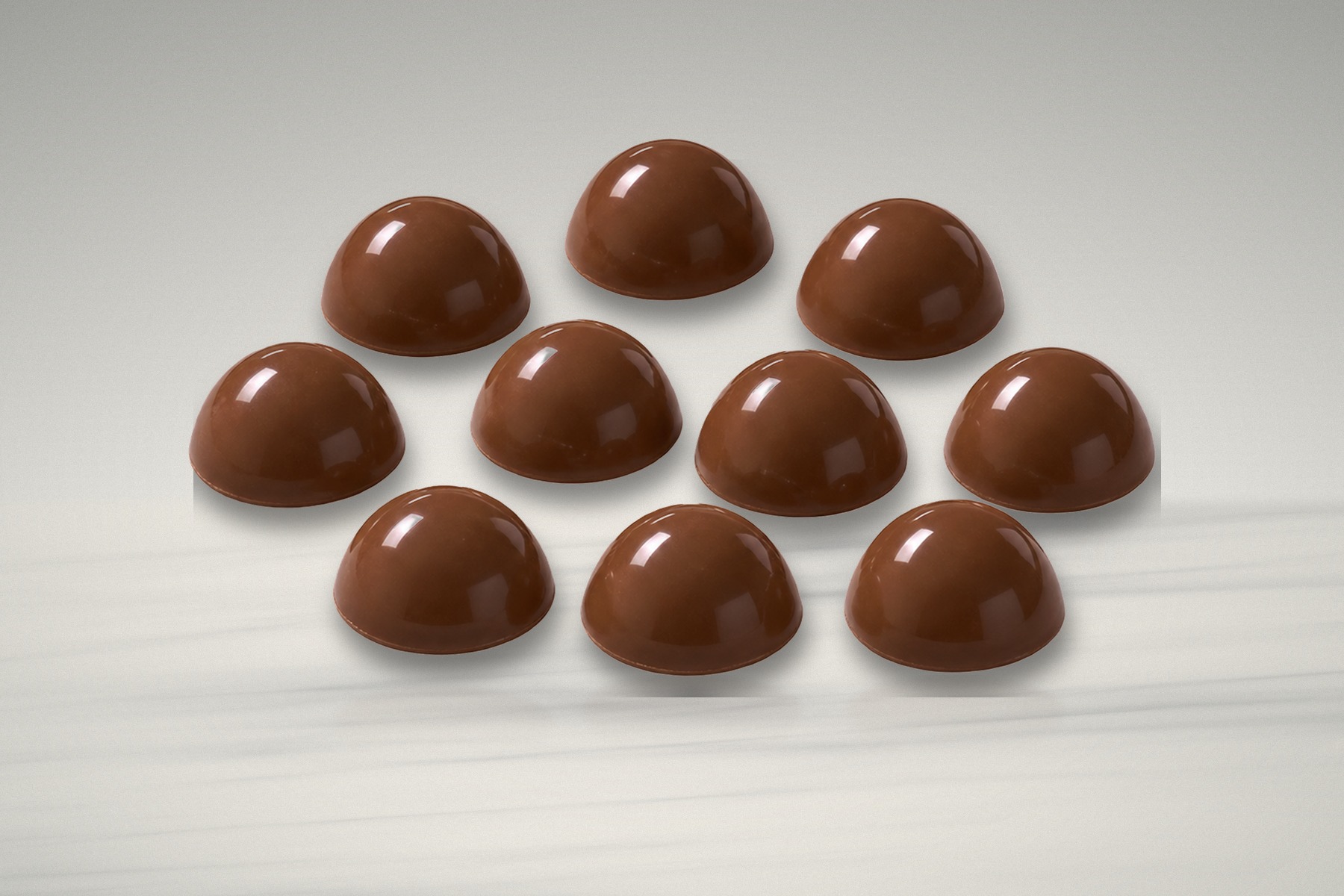
The number on the front of a legal Canadian edible is not a serving size. It is a ceiling. Under the Cannabis Regulations, edible cannabis must not contain more than 10 mg of THC per immediate container, so a package that declares 10mg THC is declaring the most the law allows that container to hold. It says nothing, on its own, about how much is in a single piece.
That gap between the legal figure and the practical one is where most misreadings of an edible label begin.
What the Cannabis Regulations actually limit
Section 102.7 of the Cannabis Regulations sets the rule in one line: edible cannabis must not contain a quantity of THC that exceeds 10 mg per immediate container. The immediate container is the package in direct contact with the product. That wording matters when several containers are sold together. Health Canada's packaging and labelling guide is explicit that in a co-pack, each immediate container is held to the 10 mg limit on its own, rather than the outer box being held to it as a whole.
The limit also applies subject to the variability limits the Regulations set out elsewhere. A declared figure is a target with a permitted tolerance around it, not an exact count of molecules, which is one reason the accuracy of the manufacturing process carries so much weight.
Two things the rule does not say are as important as what it does. It does not set a serving size. And it does not say how the 10 mg is divided. A container holding one piece and a container holding twenty can both sit exactly at the cap. That is why 10mg THC, read alone, tells you very little: it describes the package, and a package can be built in many ways.
Per unit and per package: reading the two figures
Health Canada's packaging and labelling guide sets out how THC content appears on an edible label. Where the product is in discrete units, meaning pieces that are separately formed and portioned, the label carries two figures: THC per unit, in milligrams, and THC for the whole container. Where the product is not in discrete units, a beverage for example, only the container figure appears.
So a label stating 10mg THC for the container and 1 mg per unit describes ten pieces. A label stating 10 mg for the container and 5 mg per unit describes two. A label with a container figure and no per-unit line describes a product that is not divided at all. Three entirely different structures, one legal maximum.
The per-unit figure describes a single piece. The container figure is the sum of all of them. Reading only the larger number is an easy mistake, because it is the one that matches the regulation and the one most often repeated, but it is the smaller number that describes what a single piece contains.
Why the format divides the limit
The regulation fixes the total. The manufacturer decides the increment. That is a format decision, made long before a batch is produced, and it determines how small a step the structure of the product allows.
A product divided into ten 1 mg pieces offers ten small, equal steps up to the same 10mg THC ceiling. A product divided into two 5 mg pieces offers two. Neither is more or less legal, and neither changes the cap. What changes is the size of the smallest step available, and that is entirely a manufacturing choice.
The finer the division, the harder the problem. Manufacturing tolerance is proportional, so a 1 mg piece demands a far tighter process than a 5 mg one to reach the same accuracy. We have written about that separately in the engineering behind a one-milligram dose, and our responsible consumption philosophy sets out why we chose to build at the small end. The short version is that a per-unit figure is only worth printing if every unit matches it. That is why cannabinoid content is verified by laboratory analysis on every lot, and why product does not ship on commercial judgement alone.
What Health Canada advises about the cap
Health Canada does not present 10mg THC as a recommended amount. In its guidance on lowering the risks of cannabis use, it advises adults to look for edible products that contain 2.5 mg of THC or less, and to start low and go slow to minimize health risks and the risk of overconsumption. Its own reminder is direct: the total amount of THC in a package of edible cannabis can be up to 10 mg.
The Council of Chief Medical Officers of Health made the same point in its 2020 statement on edibles, describing up to 10 mg in a single package as a large amount for someone consuming cannabis for the first time or infrequently.
The second half of the guidance concerns time. Health Canada advises waiting to feel the effects before taking more, and states that with edible cannabis, effects can take from 30 minutes to 2 hours to be felt, and up to 4 hours to be felt fully. We repeat those figures as Health Canada publishes them and add nothing to them. Individual responses vary, and a manufacturer is not in a position to characterise them. Why the timing differs from inhaled products is covered in how edibles are different.
Read together, the regulation and the guidance describe a package whose legal ceiling sits well above the starting amount Health Canada suggests. A label that states the per-unit figure clearly is what makes that guidance possible to follow from the package alone.
What a manufacturer can say about 10mg THC on a package is narrow and exact: how much THC the container holds, how finely it is divided, and how that was verified. We make precision low-dose chocolate formats in Thunder Bay, Ontario, and those three facts are the ones we can stand behind. How any of it is experienced is not ours to describe.
Next: How edibles are different: format, timing and why precision matters
← All posts