
Posted
Do edibles expire
Do edibles expire? What the label dates on a legal edible mean
A legal Canadian edible is not allowed to carry an expiry date. What it carries instead is a packaging date, storage conditions and, sometimes, a best-before date, and each one means something specific.
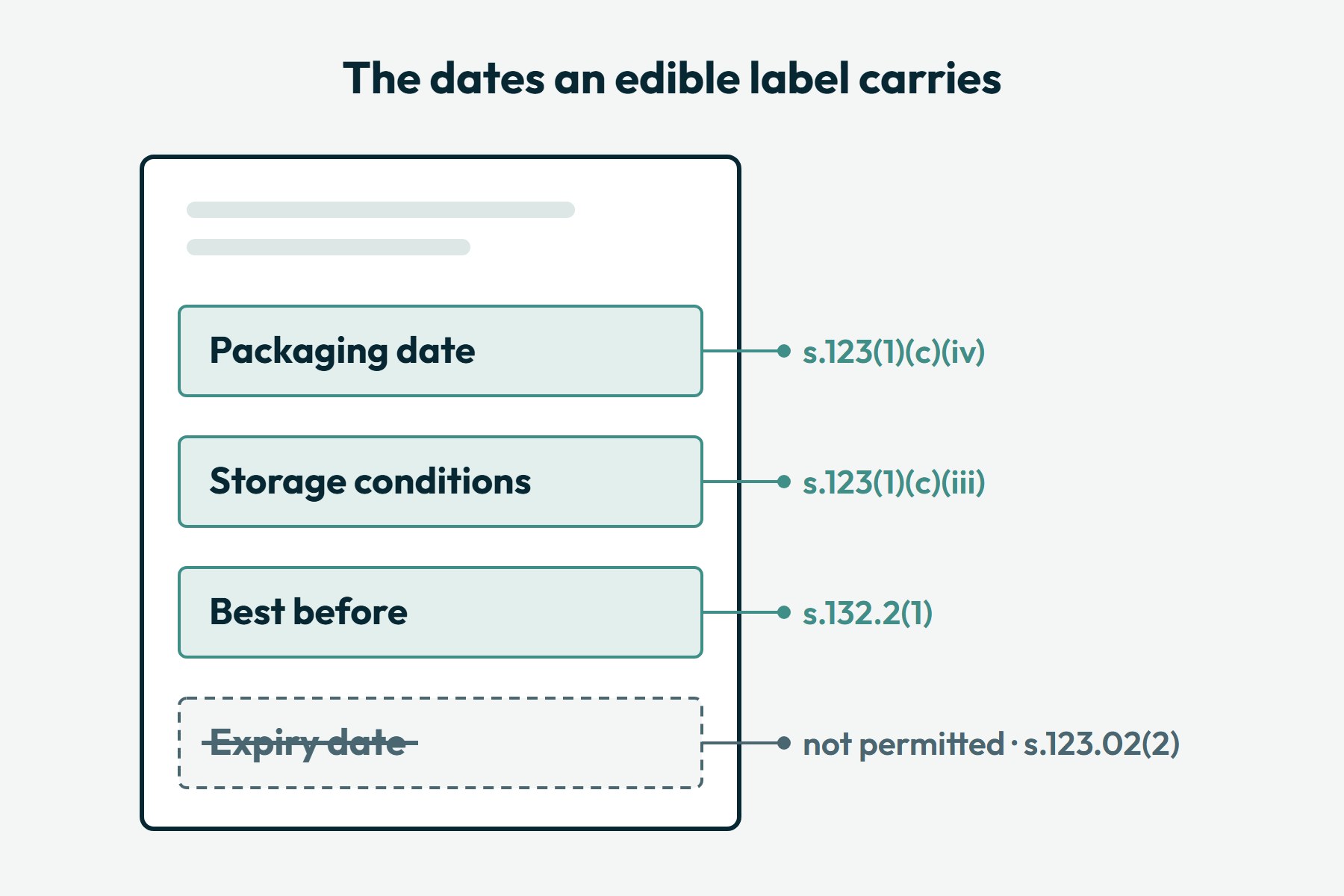
A legal Canadian edible will never carry an expiry date. That is not an oversight by the manufacturer. Section 123.02(2) of the Cannabis Regulations says it in one line: the label of a container in which edible cannabis is packaged must not include an expiry date. So the honest reply to do edibles expire is that the law does not frame the question that way. It gives an edible three other things instead: a packaging date, recommended storage conditions and, in some cases, a best-before date.
In this article:
The dates a legal edible label carries
Every cannabis product label must show the packaging date, under section 123(1)(c)(iv). It is close to exact rather than exact: section 123(2) allows the printed date to differ from the real one by up to seven days either way. It records when the product was sealed, not how long it will last. The outer box of a pack holding several containers is exempt from it, because each container inside carries its own.
The expiry date is a different idea. The Regulations define it as the end of the stability period of a cannabis product, shown at minimum as a year and month. For dried cannabis, extracts and topicals, section 123.02(1) permits one only when the processor has data showing that, stored as recommended, the product keeps its THC and CBD content within set limits and its contaminants within tolerance for the whole period. For edibles the option does not exist at all.
What edibles have instead is a food concept: durable life. The Regulations define it as the period, starting on the day the product is packaged, during which it will retain, when stored under conditions appropriate to it, without any appreciable deterioration, its normal palatability and any other qualities the processor claims for it. Section 132.2(1) makes the date that ends that period mandatory on the label when the durable life is 90 days or less. Health Canada's packaging and labelling guide adds that it may also appear when the period is longer, and that it is shown with the words "Best before".
The last field is easy to skip and it matters most. Section 123(1)(c)(iii) requires the label to state the recommended storage conditions, which Health Canada's guide says may refer to temperature, light or humidity. Durable life is defined against appropriate storage, so the two fields belong together. A best-before date assumes the product was kept as the label says.
Why a legal edible is built to sit on a shelf
The Regulations also decide, before any date is printed, what kind of product can be sold. Section 102.4 prohibits selling an edible whose unopened container has to be kept at or below 4 °C to stop it becoming contaminated before its durable life date. Section 102.5 prohibits a hermetically sealed container where any component has both a pH above 4.6 and a water activity above 0.85. Together they rule out products that depend on refrigeration or on a sealed can to stay sound. A legal edible cannot depend on cold storage to stay free of contamination in its unopened container.
That is the regulatory answer to do edibles expire: a legal edible is designed from the start to keep in its sealed container at ordinary conditions, and its label tells you when it was packed and how it should be stored.
What can change in a stored chocolate product
A shelf-stable product is not an unchanging one. In chocolate the change most likely to show is in the fat. The crystal form cocoa butter is tempered into is metastable, and a 2025 perspective on tempering from the University of Guelph describes temperature cycling in storage as causing repeated partial melting and recrystallisation, which appears as bloom on the surface (Crystal Growth & Design, 2025). Bloom is a change in how the fat is arranged. The causes on the production side are covered in tempering milk chocolate.
The cannabinoid figures are a separate question, and the Regulations tie them to a specific moment. Section 90(2) requires cannabinoid testing on the final form of each lot, and the declared per-unit and per-package figures come from that analysis. For other product classes the Regulations ask for stability data before an expiry date may be printed. For edibles they ask for a durable life and the storage conditions that go with it. We do not publish figures for how cannabinoid content moves during storage, and we will not state one here that we have not measured.
So, do edibles expire? Not in the sense the label could tell you. A legal edible carries a packaging date, storage conditions and, where the durable life is short, a best-before date, and those are the dates the law permits. How to keep a product at home, sealed and away from children, is covered in safe storage for cannabis at home. Our own part is the half that sits on the package: every lot is laboratory tested before release, and product does not ship on commercial judgement alone.