
Posted
Low dose edibles
What low dose edibles means on a legal Canadian label
The Cannabis Regulations never use the words "low dose". They set a package cap, a per-unit figure and a tolerance, and those three numbers are what the phrase has to be checked against.
"Low dose" does not appear anywhere in the Cannabis Regulations. There is no threshold in Canadian law below which an edible becomes low dose, no prescribed wording that goes with it, and no test that a product must pass to use the phrase. When a retailer, a menu or a package describes low dose edibles, the description is a summary of the numbers on the label, and the label is where it has to be checked.
That makes the question narrower than it looks. What the law does fix is a package cap, a per-unit figure and a tolerance around that figure. Low dose edibles are products where those numbers are small, and the interesting part is what the Regulations require once a manufacturer decides to make them small.
In this article:
What the label states instead
Section 102.7 of the Cannabis Regulations caps edible cannabis at 10 mg of THC per immediate container. For a product in discrete units, section 132.18 requires two THC figures on the label: the quantity each unit could yield, preceded by "Total THC per unit", and the quantity the whole package could yield, preceded by "Total THC". The second may not exceed 10 mg. How those two figures are read together is covered in what 10mg THC means on a legal Canadian edible.
The closest thing to a published reference point comes from Health Canada rather than the Regulations. In its guidance Cannabis: lower your risks, Health Canada advises: "Look for products that contain 2.5 mg of THC or less." The same page reminds readers that the total THC in a package of edible cannabis can be up to 10 mg. That is advice about what to look for on a label. It is not a legal definition, and it does not turn any product into a low-dose product by regulation.
The Act puts one firm limit on the description itself. Section 26(e) of the Cannabis Act prohibits a package or label carrying information that is likely to create an erroneous impression about the quantity, strength, concentration or potency of the cannabis. Whatever a product is called, the figures have to bear the description out.
Why some products divide the cap finely
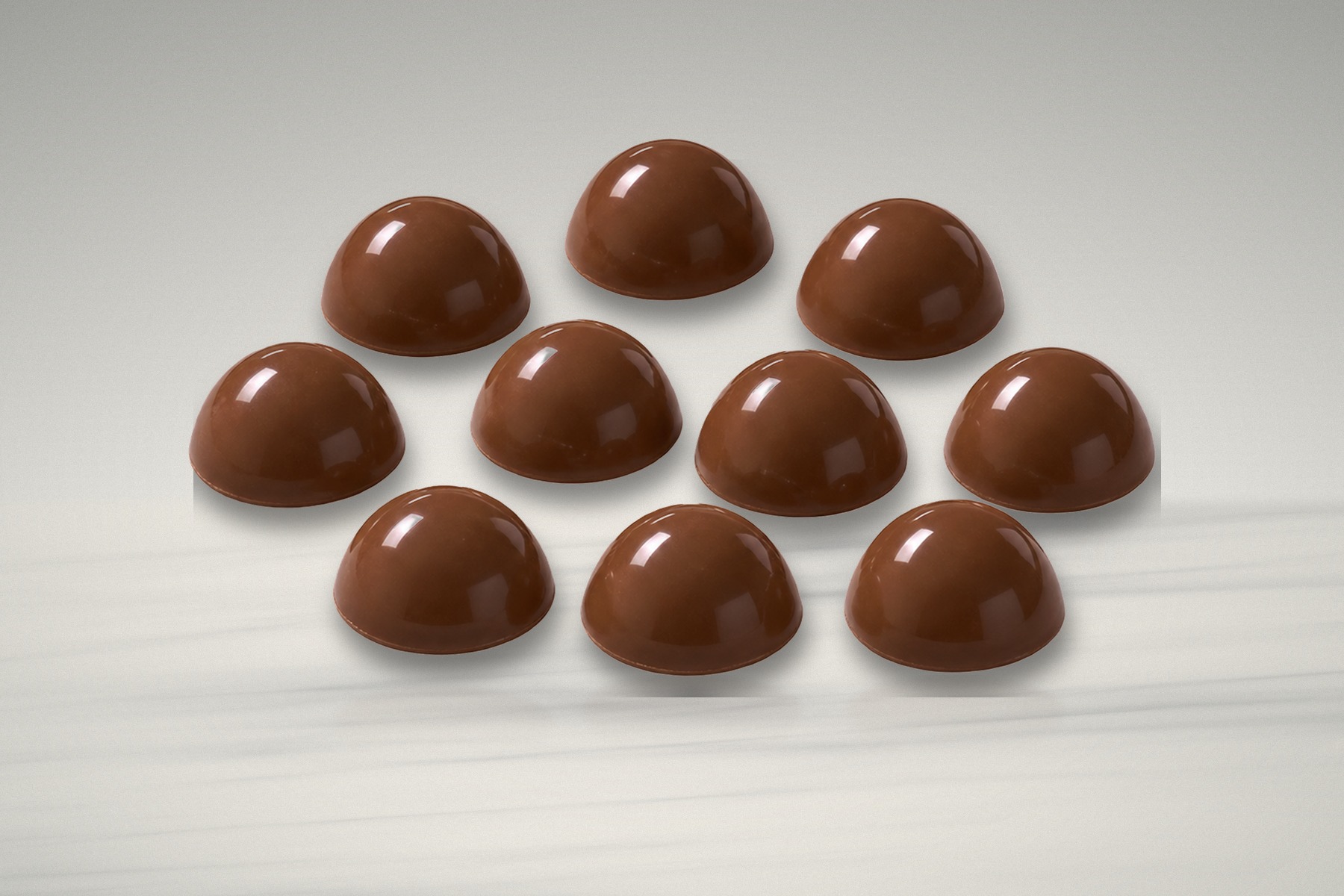
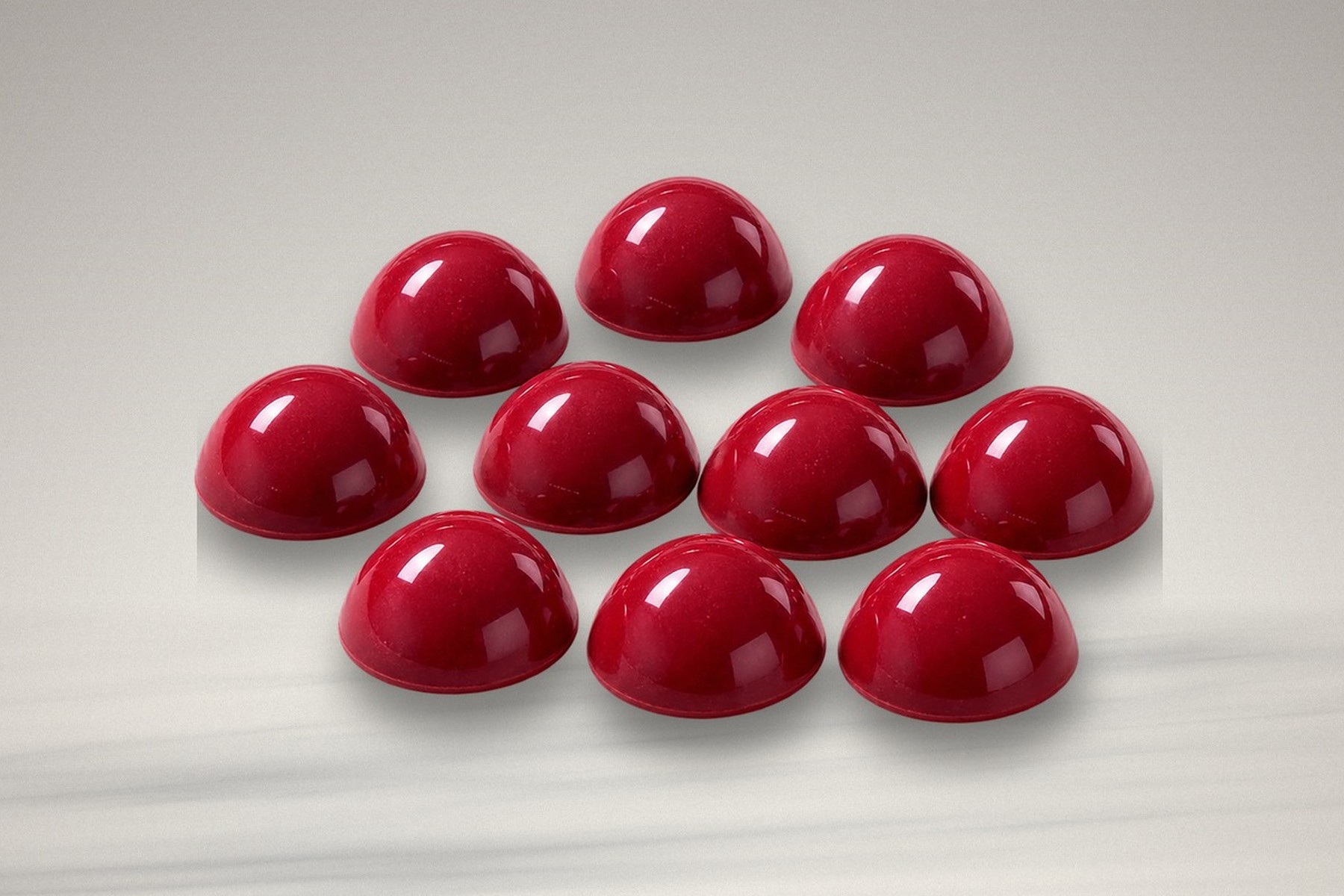
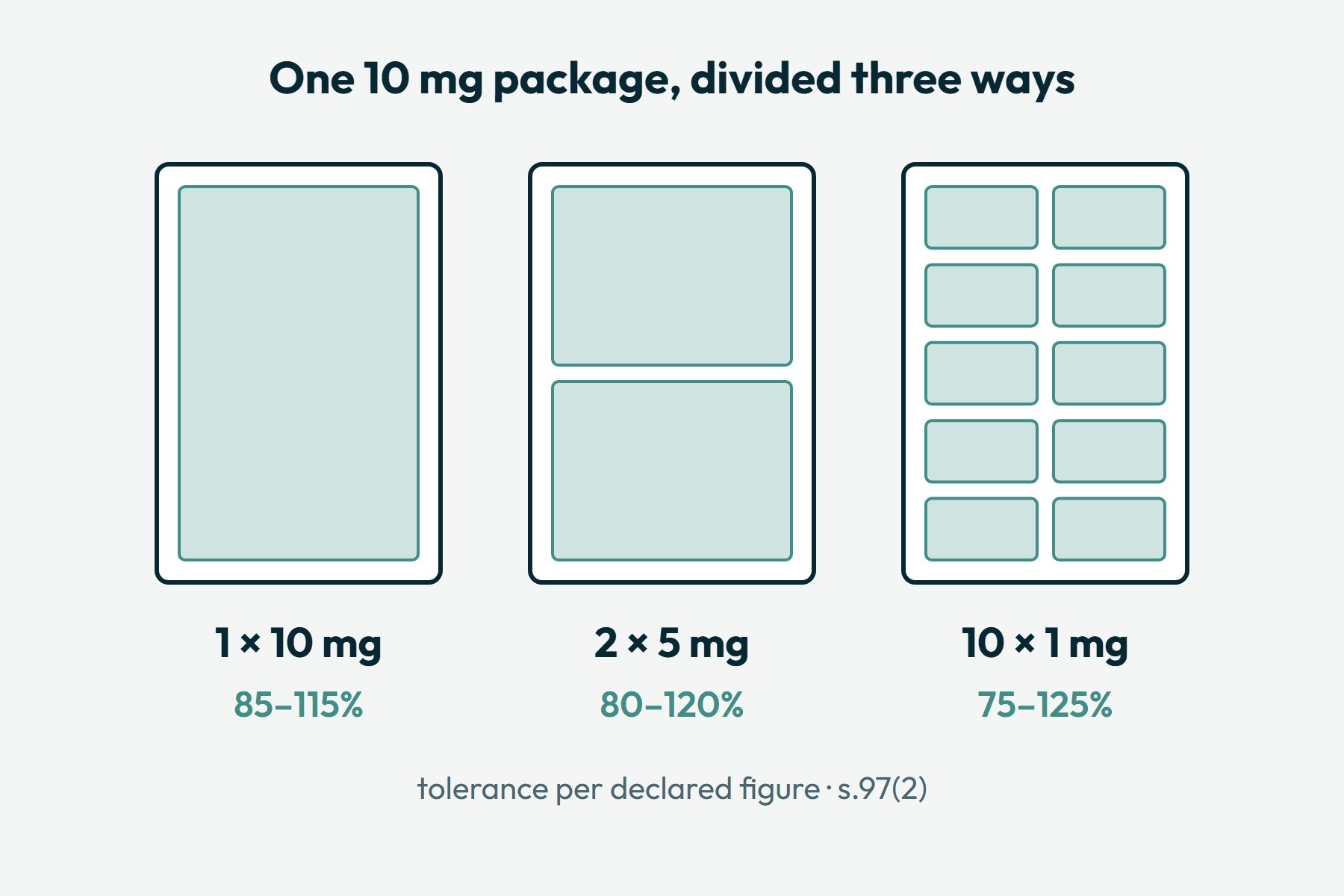
The Regulations fix the total. The manufacturer decides the increment. A 10 mg package can be one unit, two units of 5 mg or ten units of 1 mg, and all three sit at the same legal ceiling. As our responsible consumption page puts it, regulation decides what a package may hold and the format decides how finely that is divided.
Dividing finely does not loosen any rule. It brings three into sharper play.
The tolerance band is widest, and hardest to hold
Section 97(2) sets how far the real content of an edible may sit from its declared figure. Above 5 mg the band is 85% to 115%. Above 2 mg and up to 5 mg it is 80% to 120%. At 2 mg or less it is 75% to 125%, so a unit declared at 1 mg must contain between 0.75 mg and 1.25 mg. The wider band is not leniency. Manufacturing tolerance is proportional, so an error that disappears on a 10 mg unit is ten times as significant on a 1 mg one, a problem we have written about in the engineering behind a one-milligram dose.
Every unit has to match the others
Section 98.1 prohibits selling a container of multiple units unless the properties of each unit, including size, are consistent. A package of ten small units is ten chances for one to differ, and the rule applies to every one of them. The per-unit figure on the label only describes the package if each unit in it carries what the label says.
A unit meant to be divided has its own rule
Some products reach a small increment by presenting a larger unit as something to be broken into parts. The Regulations address that directly. Under section 97.1(2), if discrete units are represented as able to be divided into sub-units, each sub-unit must contain between 75% and 125% of the THC, and of the CBD, in each of the other sub-units. A piece presented as divisible is held to the same kind of consistency as separately moulded units, which is one reason a manufacturer may prefer to mould the small increment directly.
What a low-dose label does not say
A small figure on a label describes content. It does not describe an experience, and nothing in the Regulations or in Health Canada's guidance presents it as one. We make no claim about what any quantity of THC does, and a manufacturer is not in a position to characterise individual responses in any case.
What a manufacturer can stand behind for low dose edibles is narrow and exact: the package total, the increment, and the evidence that each unit carries it. Our Micro format divides the 10 mg cap into ten units of 1 mg, and cannabinoid content is verified by laboratory analysis on every lot before it is released. Those are the figures the phrase rests on.